1-Day Course
Emergency First Aid at Work
Our Emergency First Aid at Work (EFAW) course gives learners the practical skills and confidence to act as an emergency first aider — recognising an emergency, keeping a casualty safe, and providing effective first aid until professional help arrives. Delivered in a single, focused day with plenty of hands-on practice.
Who Is This Course For?
EFAW is designed for lower-risk workplaces where a workplace first-aid needs assessment identifies the need for an emergency first aider rather than a fully qualified first aider. It's a strong fit for offices, retail units, hospitality venues, schools and similar lower-risk environments where the priority is having someone on-site who can respond calmly and correctly in those first critical minutes.
What You'll Learn
- Recognising and managing an emergency situation
- CPR technique and maintaining correct rhythm
- Safe use of an automated external defibrillator (AED)
- Responding effectively to a choking casualty
- Controlling bleeding and treating wounds
- Treating burns and scalds correctly
- Recognising and managing shock
- Managing seizures safely
- Recording and reporting incidents correctly
How the Day Runs
EFAW is a single six-hour day, run at a steady pace with regular breaks so nothing feels rushed. Here's how it breaks down into sections.
The day opens with introductions, a walkthrough of the facilities and fire exits, and a clear outline of what you'll cover and how you'll be assessed. From there, the group moves straight into the core of emergency response: how to take charge of a scene safely, how to assess a casualty using a structured approach, and when and how to call for help — including the extra precautions needed around electrical incidents. You'll also cover how to care for someone who is unresponsive but still breathing, including placing them in the recovery position, and how to recognise and manage a seizure safely without putting yourself or the casualty at risk.
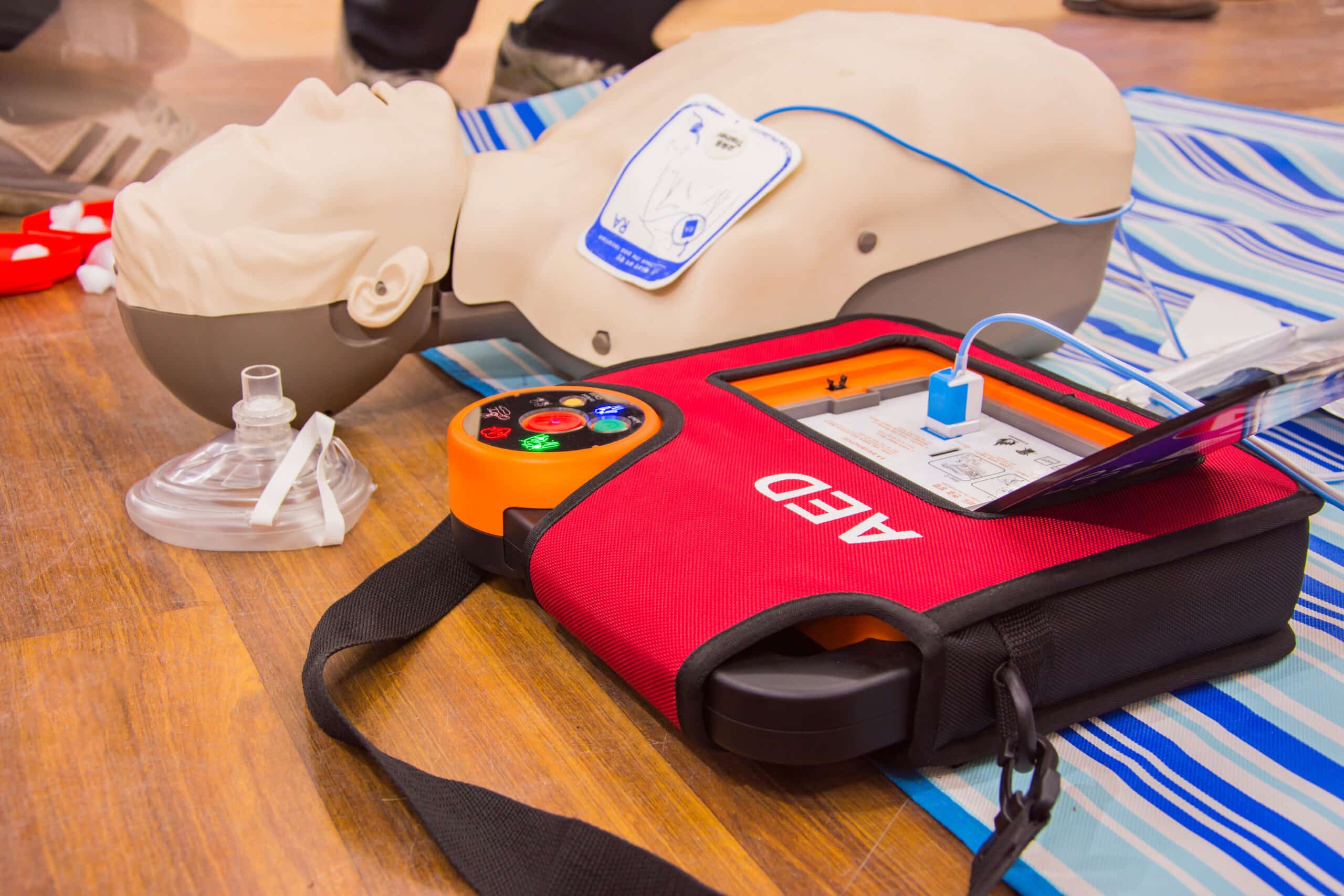
This is the most hands-on part of the day. You'll practise CPR on training manikins until the rhythm and technique feel natural, including how to use a face shield safely. Alongside this, you'll learn how to operate an automated external defibrillator (AED) with confidence — understanding the "chain of survival" and exactly what to do in the moments before and after the device arrives. The session closes with choking response for an adult casualty, covering both back blows and abdominal thrusts.
After lunch, the focus shifts to hygiene and infection control when giving first aid, before moving into bleeding and wound care — from minor cuts through to more serious bleeds that need direct pressure and urgent help. You'll also cover how to recognise and manage shock, which often accompanies significant blood loss, and how to treat burns correctly, including electrical burns, chemical burns, and chemical splashes to the eye.
The final session covers the administrative side of being a workplace first aider: how to record and report an incident properly, and a plain-English look at COSHH and why it matters when responding to an emergency involving hazardous substances. The day closes with a recap, a short continuous assessment check, and your EFAW certificate.
Frequently Asked Questions
Your EFAW certificate is valid for 3 years from the date you complete the course. We recommend booking a refresher before it expires so your skills and knowledge stay current — an HSE-aligned refresher is the usual route back to full certification.
No previous experience is needed. EFAW is designed for complete beginners and is usually most learners' first formal first aid qualification. Our trainers build everything up from the basics, step by step.
Just wear comfortable clothing you can move and kneel in, since the day involves practical exercises on the floor and with training manikins. Bring something to take notes with if you'd like, though we provide course materials.
Yes. On-site delivery is available nationwide across England, Scotland and Wales — our trainer brings all the equipment needed, including manikins and training AEDs. Each session takes a minimum of a handful of learners up to a maximum of 10, so it works well for a single department or a small team.
Assessment is continuous throughout the day, combining practical demonstration of skills with a short written knowledge check — there's no high-pressure final exam. If a learner needs more support in a particular area, our trainers work with them during the session, and where extra practice is genuinely needed we'll talk through a straightforward resit option rather than leaving anyone without a valid certificate.